
Pillar Five · JIL Corridor
Pre-Clear Institutional Transfers Before They Move.
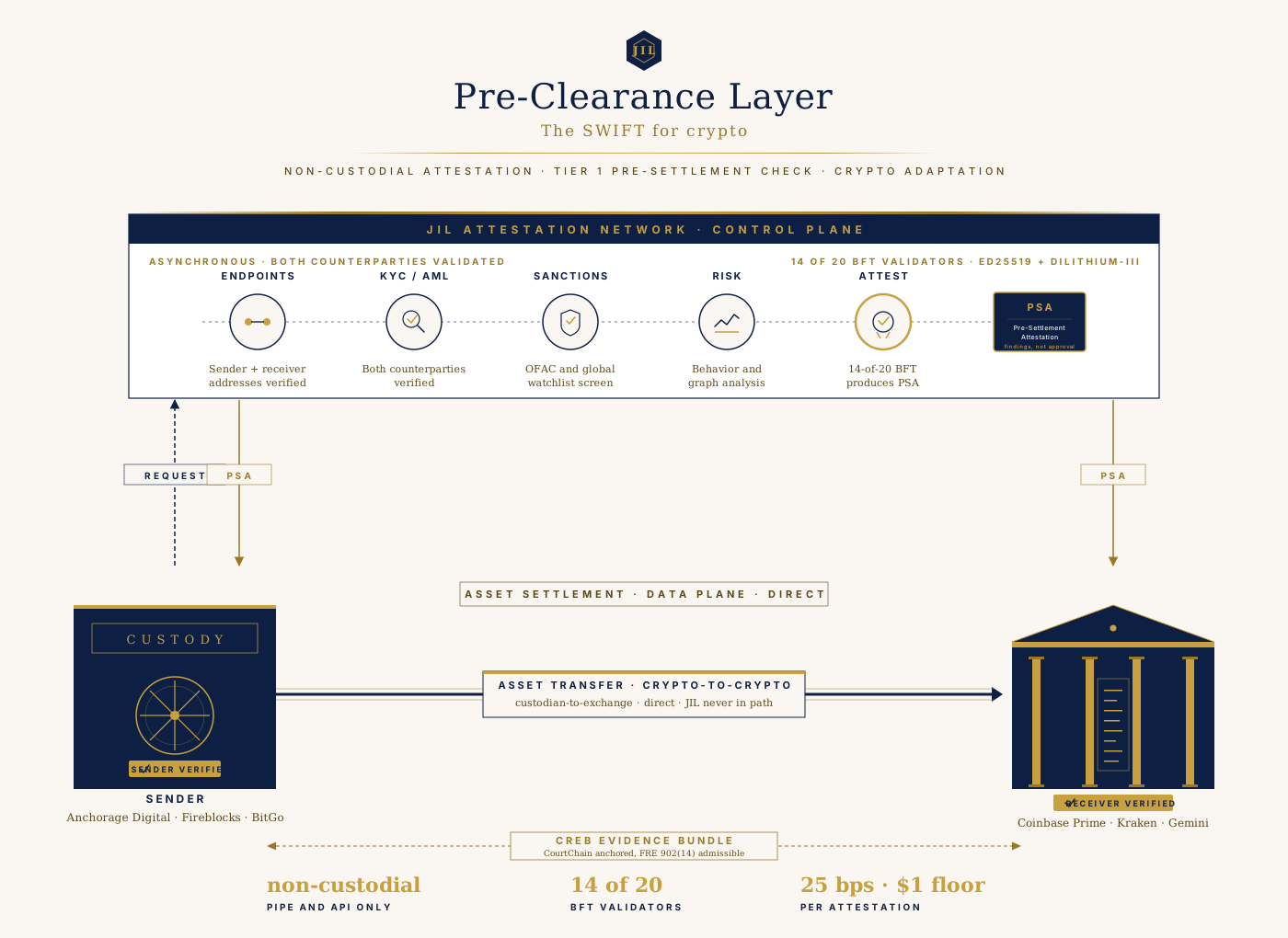
A neutral pre-clearance and attestation layer between institutional digital-asset custodians. JIL never takes custody, never bridges, never wraps. Custodians continue to move assets on their own rails. JIL signs the compliance verdict before transfer and seals a Court Ready Evidence Bundle after, anchored on CourtChain under FRE 902(14). 5 bps per attestation, $1 floor.
When Fireblocks moves $250M of USDC to Anchorage, both compliance desks face the same five problems at the same moment: Travel Rule, counterparty liability, manual review cost, settlement speed, and examiner-facing proof. No existing provider solves all five. Travel Rule networks exchange information. Wallet-intelligence tools score risk. Neither produces a neutral, court-admissible attestation that resolves liability between the two custodians at the moment of transfer. JIL Corridor is that layer.
Business use
Built for institutional transfer risk.
Large digital-asset transfers require trust between counterparties before movement occurs. JIL Corridor helps custodians, exchanges, treasury desks, and financial institutions pre-clear transfers through a neutral attestation layer without asking JIL to custody assets, bridge tokens, or wrap value.
Six business outcomes
Where Pre-Clearance moves the needle.
Custodian-to-custodian
Both compliance desks resolve Travel Rule, counterparty risk, policy, and evidence in one signed envelope before assets move.
Stablecoin transfer review
Stablecoin issuers and major holders pre-clear large flows with a neutral, court-admissible attestation.
Institutional wallet screening
Treasury desks screen counterparty wallets and document the decision before initiating transfer.
Travel Rule support
Originator and beneficiary data exchanged via signed envelope with explicit consent and audit retention.
Treasury transfer controls
Policy-driven approvals enforced at the protocol layer. Limits per role, per corridor, per counterparty.
Counterparty risk documentation
Neutral evidence record that both sides accept. Resolves liability questions at the moment of transfer.
Use cases
Where Corridor lands.
Exchanges
Sign the compliance verdict before outbound institutional transfer. Documented record for examiner review.
Custodians
Resolve counterparty liability at the moment of transfer with a neutral, sealed attestation both sides accept.
Stablecoin issuers
Mint and redeem flows verified at the corridor layer without taking custody of the underlying asset.
Treasury desks
Pre-clear large transfers under policy-driven approvals with audit-ready evidence retained automatically.
Financial institutions
Bank-grade trust posture on digital-asset corridors without operating bridge or wrap infrastructure.
Settlement networks
Settlement nets the corridor evidence into post-trade workflow with deterministic finality.
Corridor architecture
The signed-envelope corridor in motion.
Two custodians, one neutral pre-clearance layer. The signed envelope carries Travel Rule data, counterparty screening outcomes, policy citations, and a corridor verdict. JIL never takes custody; the custodians move the asset on their own rails after the verdict is signed.
Technical deep dive
The signed-envelope corridor model.
- Originator custodian, beneficiary custodian, asset, amount, chain
- Originator and beneficiary KYC/KYB references
- Wallet addresses and counterparty signals
- Policy constraints (jurisdictional, sanctions, corridor-specific)
- Approval chain references
Standardized originator/beneficiary fields per FATF Recommendation 16 and applicable national rules. Encrypted exchange between counterparty VASPs with consent and audit retention.
Sanctions, PEP, adverse media, and wallet-intelligence signals applied at the corridor layer. Reason codes travel with the verdict.
Verdict: Pass / Review / Block. Triggered checks, reason codes, signed-envelope hash, cryptographic timestamp, and audit reference travel with the verdict.
CREB packages the signed envelope, both-counterparty acknowledgements, screening outcomes, policy citations, and CourtChain seal under FRE 902(14). Self-authenticating evidence; no custodian testimony required.
API integration with custody and treasury platforms. Direct integration with Travel Rule networks. Webhook callbacks on verdict change. Recordkeeping export to existing compliance systems.
JIL never takes custody of the underlying asset. The corridor signs the compliance verdict; the custodians move the asset on their own rails. JIL operates as an attestation layer, not a money transmitter by default.
What this is not
Scope, plainly.
- Not a custodian
- Not a bridge
- Not a wrapped-asset product
- Not a money transmitter by default
- Not a settlement agent unless separately contracted
- Not a replacement for custodian compliance obligations
Sign the verdict before the transfer.
Brief your custody compliance lead. We will walk the signed-envelope model, the corridor verdict, the FRE 902(14) seal, and the integration path with your custody platform.
Request corridor demo Request technical design